Normandy, When Summer Lets Go
The cliffs begin to empty, oysters return to their traditional season, cider apples start to fall — and the coast becomes more interesting precisely when most people stop thinking about it.
Evgenia Rumiantseva · BookTravel USA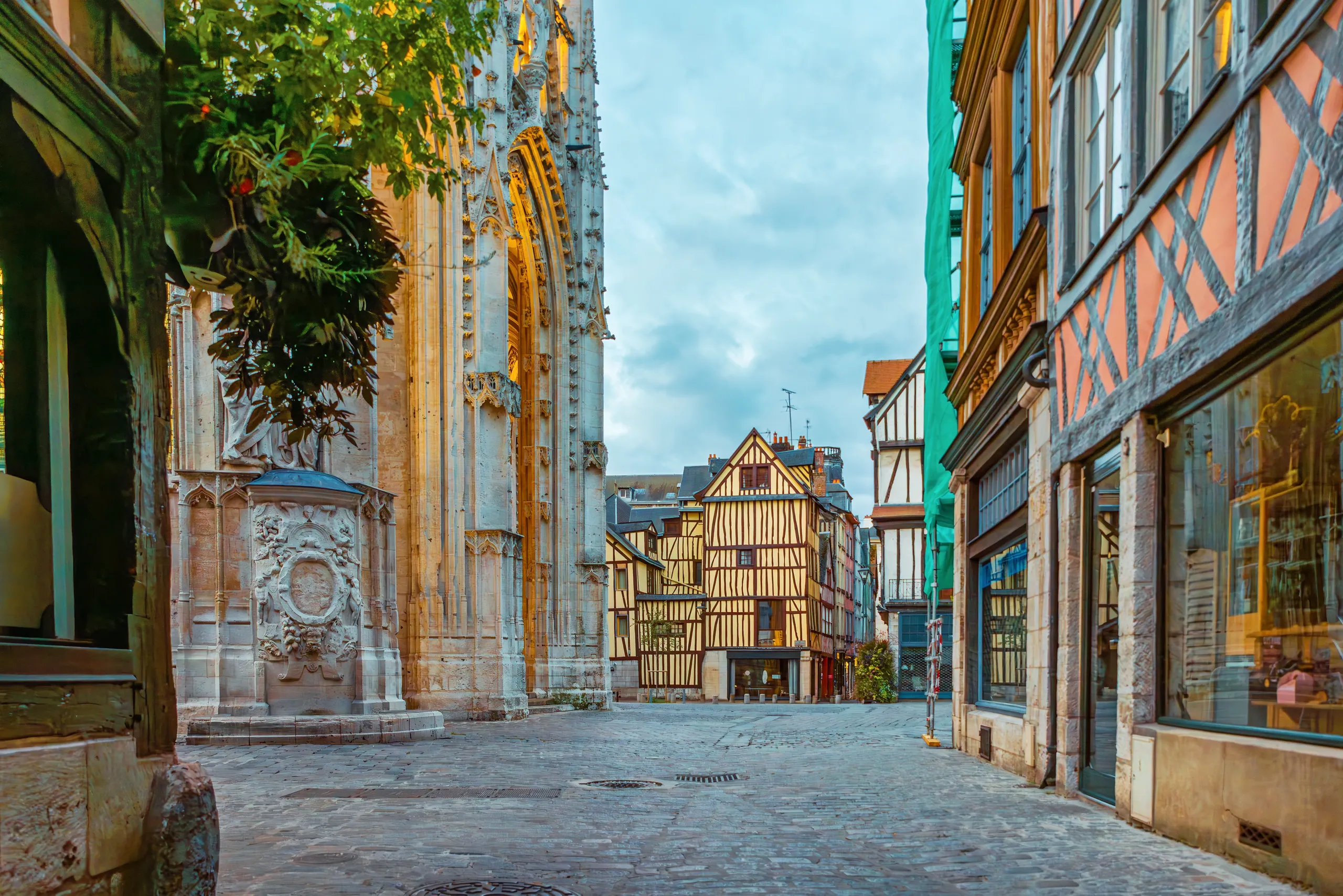
August is the obvious month for Normandy. Late September is the one we would choose.
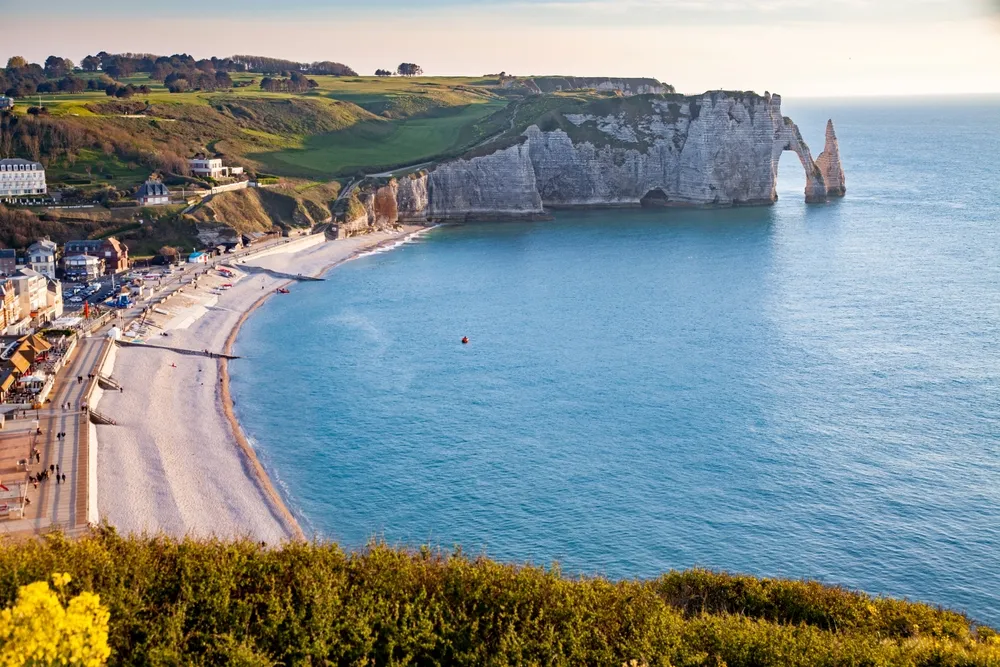
By then, Étretat has begun to breathe again. The oyster season has returned, apple harvest is starting in the Pays d’Auge, and Giverny is still open but beginning to look different from its summer self.
The weather is less predictable. That is part of it.
Normandy was never at its most beautiful under a perfect blue sky. It is the changing light — sun, cloud, mist and sea in the same afternoon — that made Monet return to this coast again and again.
After August, Normandy changes
There is nothing wrong with Normandy in July and August. It is simply the moment when everyone else has had the same idea.
Étretat, Giverny and Mont Saint-Michel can all be extremely busy in summer. From September, the rhythm begins to soften: restaurants become easier to enjoy, the cliff paths quieter, and the villages start feeling like places people live rather than places people pass through.
We would trade a few degrees of temperature for that every time.
The season is on the table too
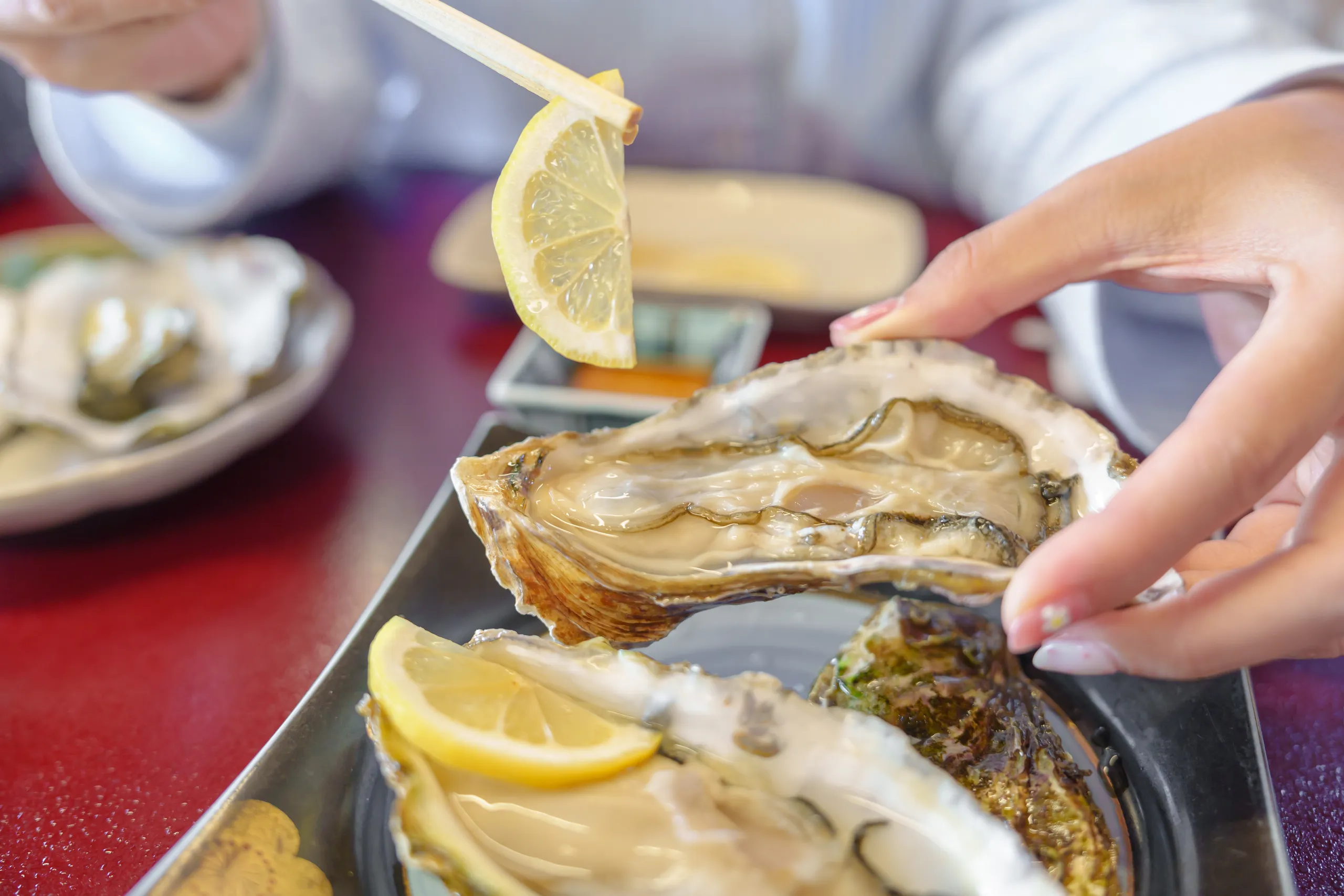
September marks the return of the traditional oyster season in Normandy. Oysters can be eaten year-round now, but the months from September through April remain the classic season, after the summer reproductive period.
For us, that means not simply ordering six oysters at lunch.
We can take a family onto the tidal flats with someone who works there, see how oyster bags and bouchot mussels are cultivated, and taste them where sea and land actually meet.
Further inland, another season is beginning at exactly the same time. Cider apples start to be harvested from mid-September.
That is when the Pays d’Auge becomes especially worth slowing down for: orchards, small producers, cider, pommeau and Calvados — ideally with someone who can open the cellar rather than another tasting-room counter.
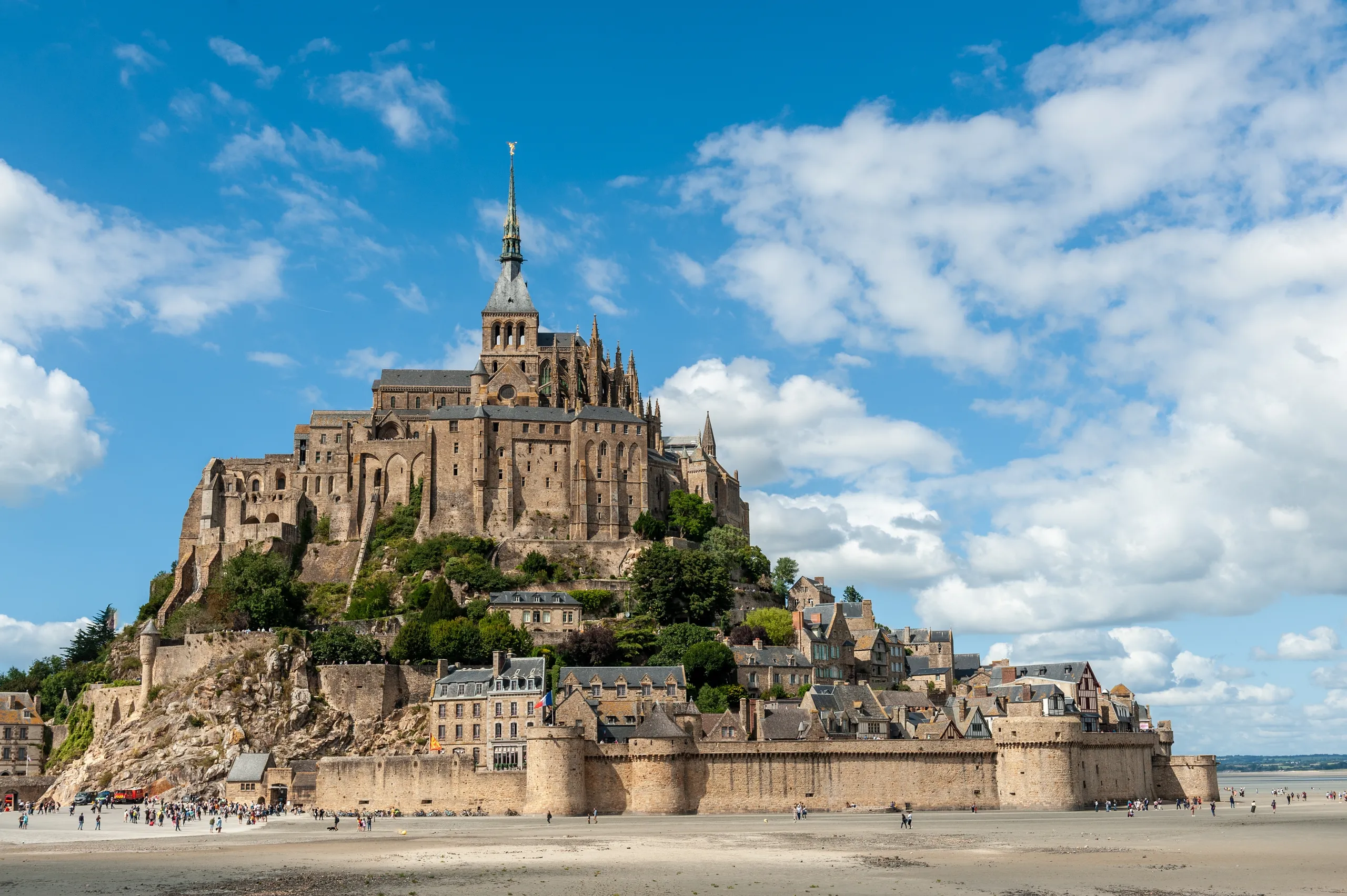
At Mont Saint-Michel, we start with the tide table
We do not decide which day to visit Mont Saint-Michel and then check the tide.
We do it the other way around.
The bay changes dramatically between low and high tide, and the timing and coefficient vary every day. For the right dates, we build the itinerary around the strongest tide rather than hoping it happens while you are there.
And sometimes the best way to understand the Mont is not from inside it at all.
With an accredited bay guide, you can walk barefoot across the tidal flats, learn to read the sand, cross channels and even experience the famous quicksand safely before approaching the abbey from the enormous open bay.
It is a completely different Mont Saint-Michel from the one seen from a shuttle bus.
The light is not a cliché here
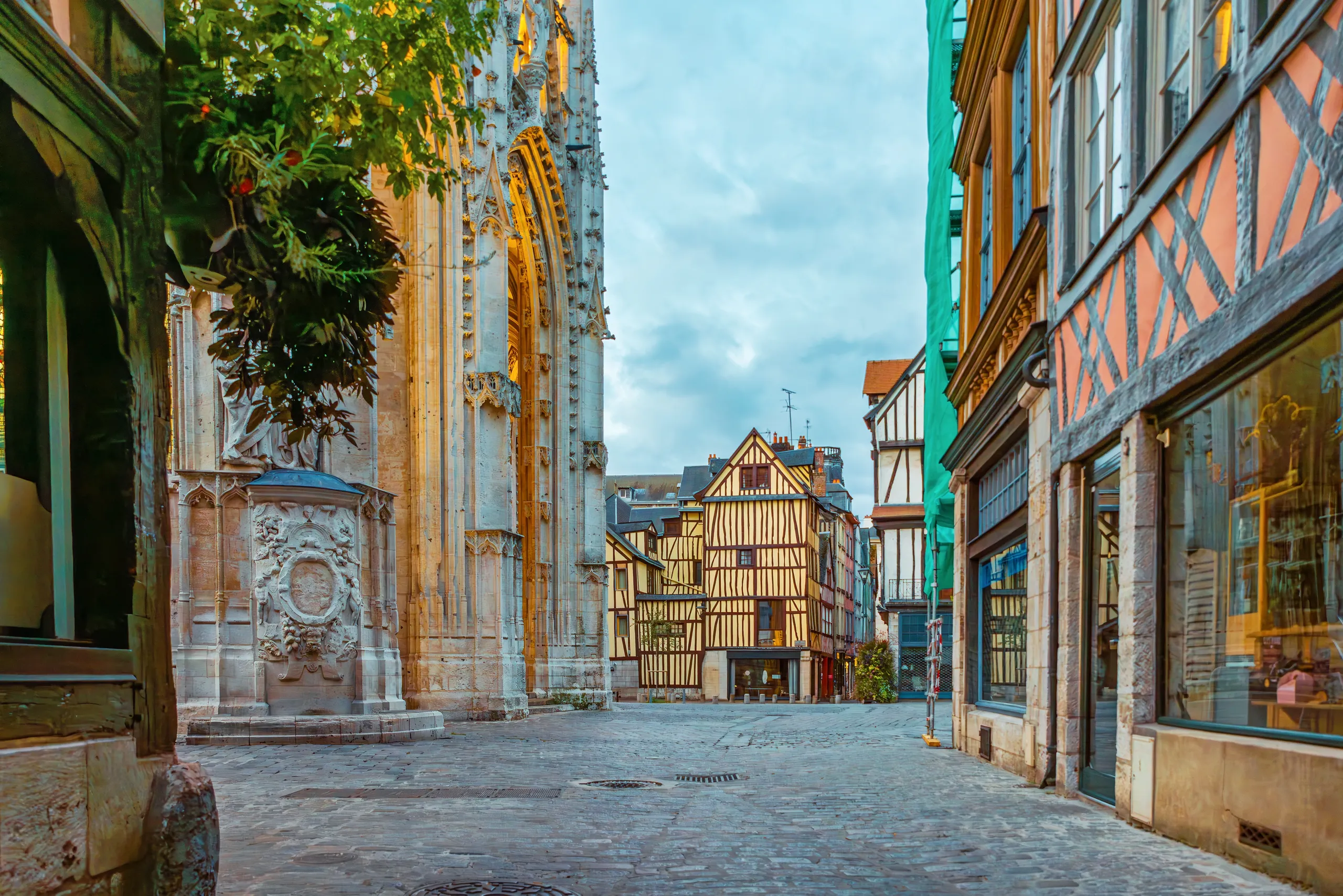
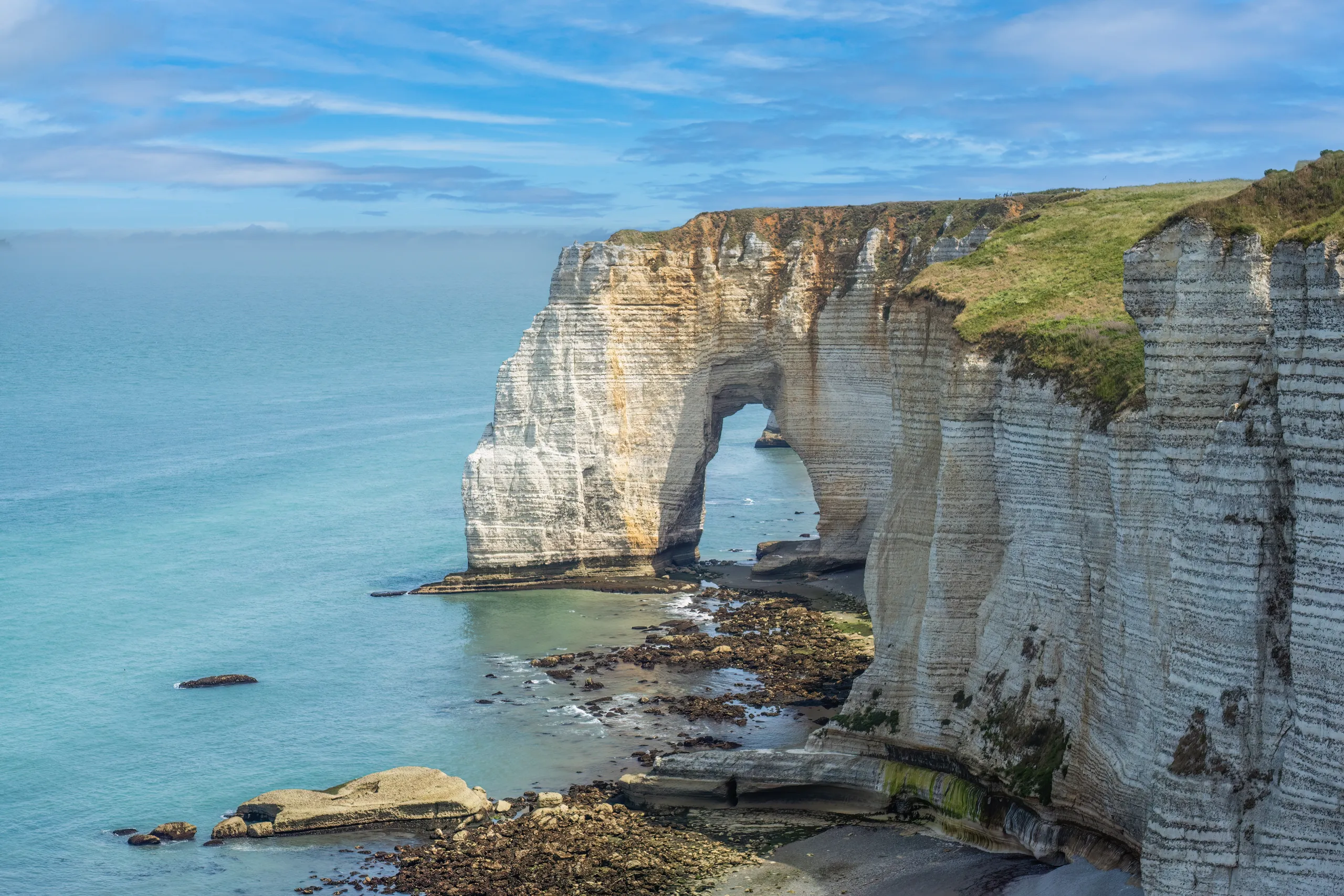
Monet returned to Étretat repeatedly in the 1880s, painting the same cliffs as the sea and weather changed around them. In Rouen, he later painted more than thirty views of the cathedral façade, moving between canvases as the light changed through the day.
That is the useful lesson for an itinerary too.
Do not give Étretat forty-five minutes between lunch and the next stop. Give it an evening. Let the cloud move. Walk back when everyone else is leaving.
The landscape does the rest.
And leave one day for the Pays d’Auge
This is the part we would not rush.
Drive through orchards and half-timbered villages. Meet a cider or Calvados producer during harvest. Taste Camembert, Livarot or Pont-l’Évêque where they belong. Stop for lunch without needing the afternoon to produce another monument.
Late September gives this day a reason beyond scenery: the cider-apple harvest is beginning, and Normandy’s food landscape is visibly at work.
It is often the least famous day of the itinerary.
And one of the ones clients remember.
01 · The Alabaster Coast after everyone leaves
Étretat is the obvious stop, but not the only reason to come.
We would time the cliffs for early morning or the final hours of daylight and let the middle of the day belong to somewhere quieter — Fécamp, Yport, a long seafood lunch or a private painting session overlooking the coast.
The point is not to collect viewpoints. It is to see why painters kept returning to the same one.
02 · Giverny, Rouen and the Monet thread
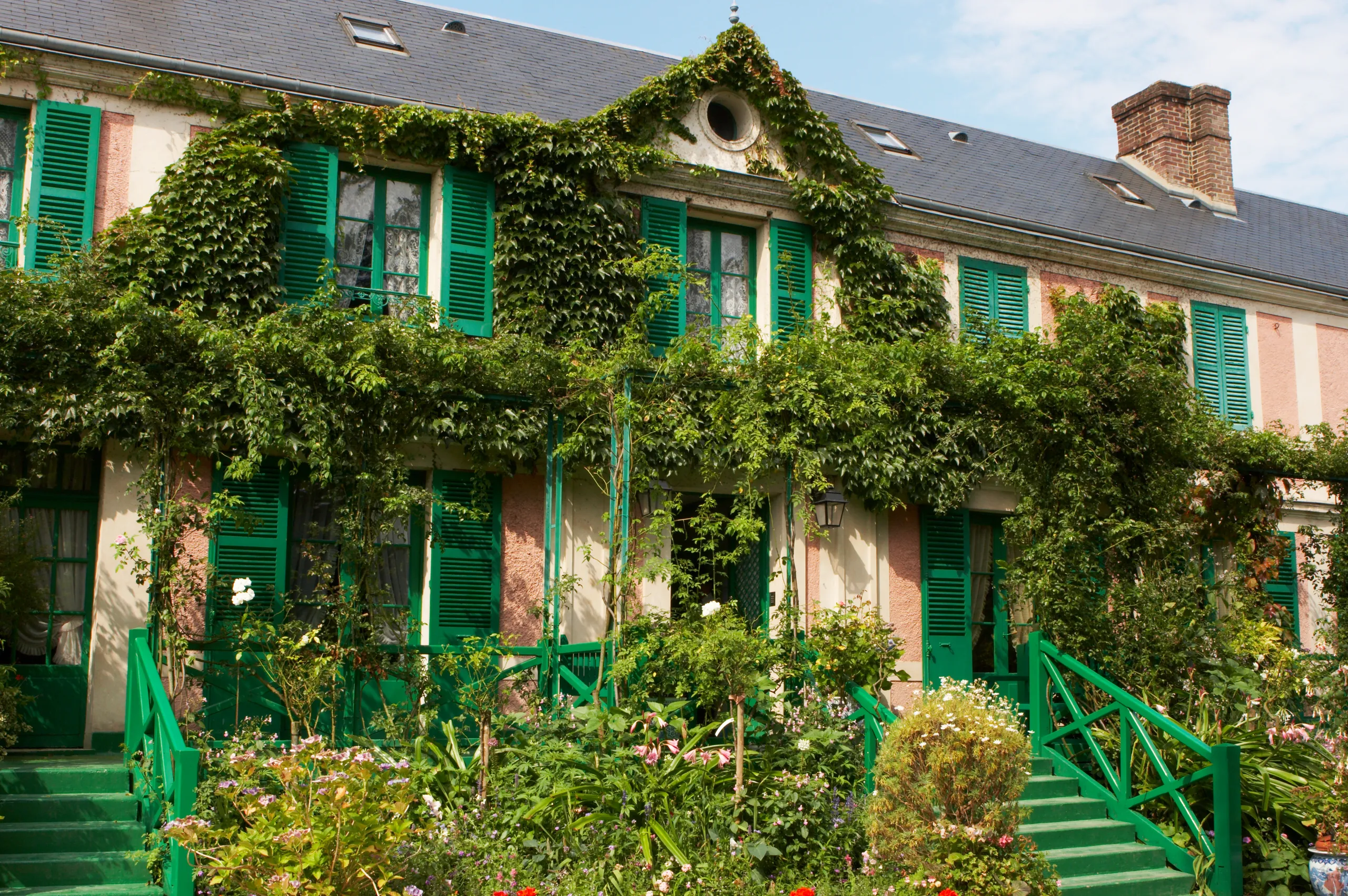
Giverny still has plenty of colour in September, but the garden is beginning its transition into autumn. Go early, before the day settles in.
Then continue to Rouen.
Stand in front of the cathedral Monet painted more than thirty times and suddenly the obsession with Norman light makes considerably more sense.
For clients interested in art, we can make this a thread through the journey rather than a museum stop: Giverny, Rouen, Honfleur and the Alabaster Coast connected by the landscapes and light that shaped Impressionism.
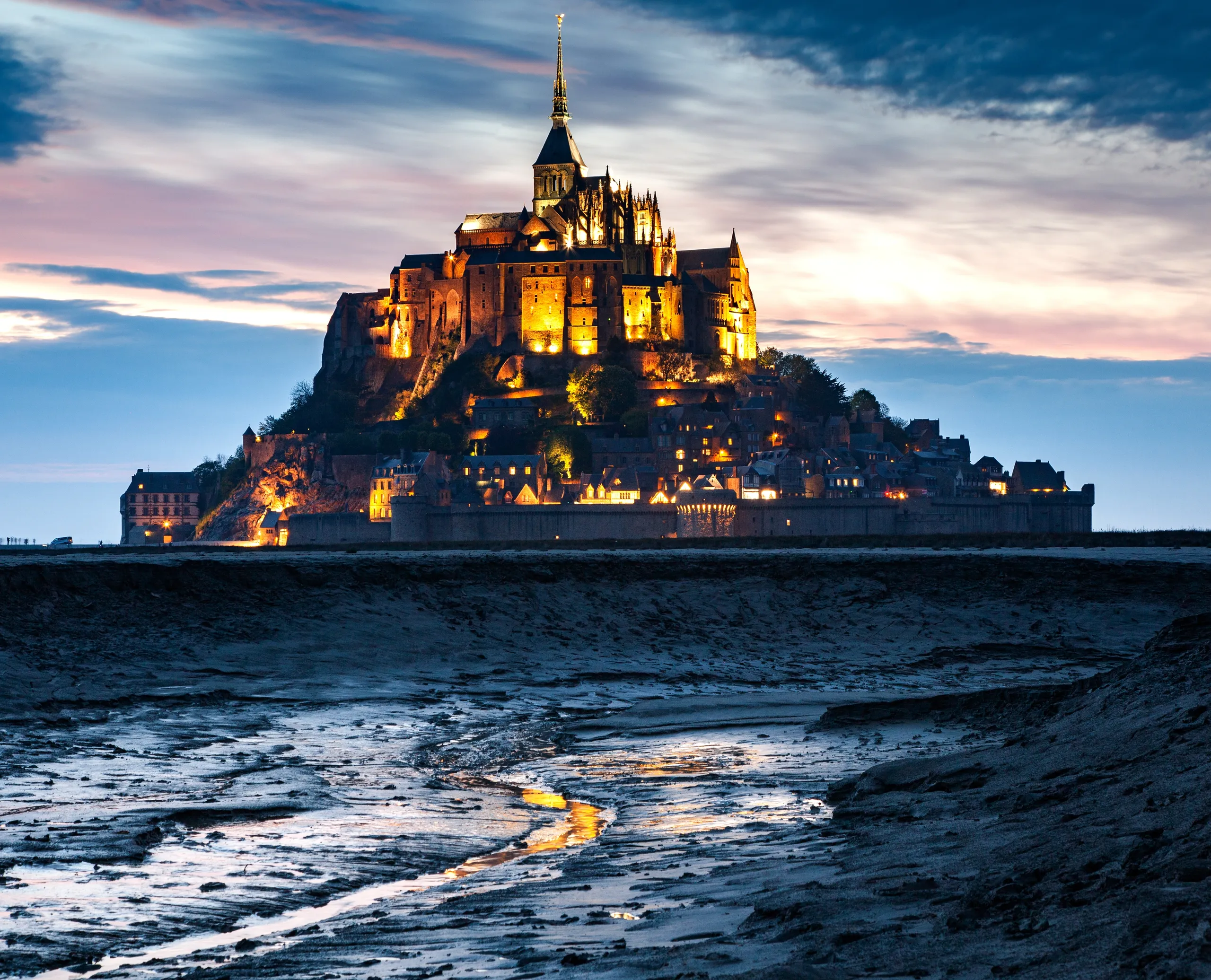
03 · Mont Saint-Michel by the bay, not only the road
Stay close enough to see the Mont after the day visitors begin to disappear.
But if the tides cooperate, we would go further: cross part of the bay on foot with a specialist guide, then return later to watch the water change the landscape completely.
The Mont is extraordinary.
The bay around it is what makes it unlike anywhere else.
- Book by
Spring is comfortable for the best small hotels and private guides; earlier if specific rooms or a particular tide weekend matter.
We would not tell you that Normandy needs to be booked a year ahead. It usually does not.
The exceptions are the places with very little inventory — and the dates we want for a reason.
- How long
Six or seven nights.
Enough for Giverny and Rouen, two or three nights along the coast, the Pays d’Auge and Mont Saint-Michel without turning Normandy into a road trip.
Two bases usually work better than changing hotel every night.
- Getting there
Start from Paris.
Giverny makes a natural first stop on the way into Normandy, after which we prefer a private driver or rental car. The region is not difficult to navigate — but some of its best days depend on being able to stop when something looks worth stopping for.
- What to check
The Mont Saint-Michel tide table before fixing the route.
Then the harvest calendar, restaurant opening days and Giverny hours.
In Normandy, the strongest itinerary comes from arranging the calendar first and the driving second.
- Rates
Upon request. The value of travelling after summer is not simply a lower room rate — it is having more choice over where you stay, when you eat and how you experience the places everyone else saw in August.
Come when Normandy belongs to itself again.
Tell us the month and the year. We will find the tides, the harvest and the right light — and build the week around them.